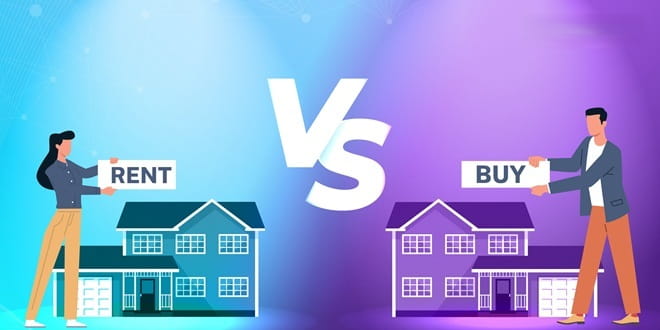
Two friends, Mei and Daniel (invented for this article), are both thirty-something professionals. Mei thinks renting is the smarter path, while Daniel is itching to buy. Their argument is a good way to see what each side gets right, and where the numbers actually decide the matter.
Round One: “Rent Is Dead Money”
Daniel’s opening line is the most common one. His point is that rent leaves your pocket and never returns, while mortgage repayments build ownership.
Mei’s reply is fair: owning has costs that never build equity either. Interest on the loan, property tax, maintenance fees, insurance and repairs all go out of your pocket as well. Only the principal part of each repayment builds ownership. A fair comparison puts total ownership costs against rent, not just the instalment against rent.
Round Two: “What About the Cash Upfront?”
Buying demands a large sum at the start: a downpayment, stamp duties, legal fees and renovation. Renting asks for a deposit and perhaps a month in advance. Mei points out that the money not spent upfront can be invested or kept as a safety cushion, and that it carries its own return, or risk.
Daniel counters that CPF savings can fund a good part of a home purchase, so some of that money is not sitting around as free cash in any case. Both are right, and the answer depends on how much cash and CPF each person has and how they would otherwise use it.
Round Three: “Flexibility Matters”
Mei values the ability to leave on short notice if a job moves overseas or a relationship changes. Selling a home takes time, and selling within a short window can attract Seller’s Stamp Duty. Daniel values the opposite: stability, freedom to renovate and no landlord deciding to sell the flat.
Their disagreement is really about how long each expects to stay. Short horizons favour renting, because the costs of buying and selling take years to recover. Long horizons favour owning.
Round Four: Building a Break-Even Sketch
They try a rough method, using round hypothetical numbers rather than any real prices:
- List the yearly costs of owning: loan interest, property tax, maintenance, insurance and an allowance for repairs.
- Add the one-off costs spread over the years you expect to stay: stamp duties, legal fees and agent costs when selling.
- Add the opportunity cost of the downpayment, meaning what that money might have earned elsewhere.
- Compare the total with the rent you would pay for a similar home over the same period.
- Then ask whether the home’s price needs to rise for owning to come out ahead, and by how much.
The last step is the uncomfortable one. If buying only wins when prices rise, then the decision rests on a forecast nobody can guarantee.
Where Real Projects Fit In
For buyers who do lean towards owning, upcoming launches add another variable: time. With an uncompleted project, you pay rent while waiting for completion, so the “rent versus buy” comparison overlaps for several years.
Daniel, for example, notices Chencharu Central Residences, a planned private mixed-use condominium in Yishun. Its website says the launch is expected in early 2027, with pricing and unit mix still to be announced, and gives an estimated completion year in its FAQ. For him that means a long stretch of paying rent and progressive instalments at the same time, which he would need to model carefully. He also uses the site’s financing calculators to test how different prices change his repayments, treating them as practice only.
Mei, meanwhile, looks at what the eligibility rules mean for her. She learns that an executive condominium such as Fablewoode Residences on Sembawang Road, which its website describes as a planned low-rise EC of roughly 265 homes with its official name, launch date and prices not yet confirmed, would come with HDB conditions and a minimum occupation period. That is a bigger commitment to staying put than she wants for now, so she keeps renting while she saves.
The Verdict
They end up with different answers, and both are reasonable. Daniel decides to buy because he expects to stay for a decade and has a solid buffer. Mei decides to rent because her plans are uncertain, though she begins preparing in case that changes.
Questions to Settle Your Own Debate
- How long do I realistically expect to stay?
- Could I afford ownership costs if interest rates rose?
- What would I do with the cash if I rented instead?
- Am I eligible for the type of home I want?
- Would I still be comfortable if prices were flat for years?
Closing Thought
Rent versus buy is not a moral question. It is a calculation about time, cash and risk, which you can test with real figures from your bank, CPF and the relevant authorities. Run the numbers under cautious assumptions, then confirm every rule and cost before you commit.
About the Author